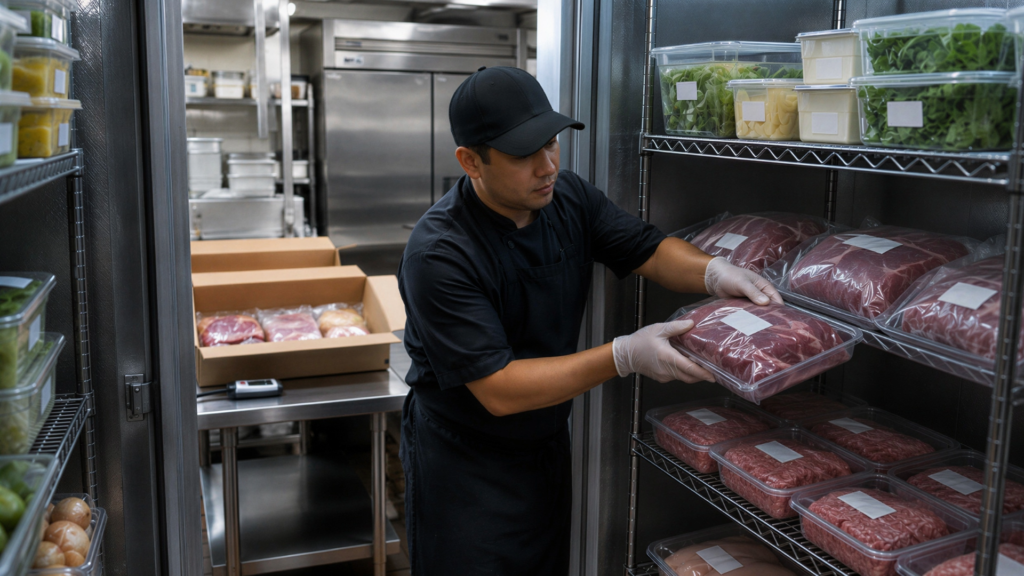
A walk-in cooler running warm doesn’t necessarily mean the refrigeration system is failing.
A damaged door gasket, blocked airflow, ice buildup, dirty components, control problems, or a refrigeration issue can all affect temperature. Some are relatively easy to spot. Others require a refrigeration technician to diagnose.
If your walk-in cooler is not holding temperature, these are some of the first things to look for.
1. Check What the Temperature Is Actually Doing
One temperature reading doesn’t tell the whole story.
Is the temperature steadily climbing? Does it rise after deliveries and take longer than usual to recover? Is it fluctuating throughout the day? Is one area of the cooler warmer than another?
The pattern can provide useful information about what may be happening.
If your team keeps temperature logs or has a monitoring system, look back at recent readings. A gradual change in performance may be easier to recognize when you can compare it with what is normal for that cooler.
2. Make Sure the Door Is Closing and Sealing
A walk-in door that does not seal completely allows warm, humid air into the cooler and makes the system work harder to maintain temperature.
Check for:
- Torn, cracked, or loose door gaskets
- A door that does not close completely on its own
- Gaps around the door when it is closed
- Condensation or frost around the opening
- A damaged door sweep or hardware
In a busy kitchen, market, restaurant, or other commercial facility, even a relatively small door problem can become more significant when the cooler is opened frequently throughout the day.
3. Look at How Products Are Stored
Air needs to circulate throughout a walk-in cooler.
Boxes, shelving, or inventory placed too close to the evaporator or blocking airflow can create uneven temperatures and make it harder for the cooler to maintain the setpoint.
If the problem began after a large delivery or a change in how the cooler is being stocked, take a look at whether airflow paths have been restricted.
Moving inventory may solve an obvious airflow problem. If temperature problems continue, there may be another issue that needs attention.
4. Pay Attention to Ice Buildup
Some frost can be normal. Heavy or recurring ice buildup is not something to simply remove and ignore.
Ice around the evaporator coil or other refrigeration components can restrict airflow and affect cooling performance. It may also be a symptom of another problem involving airflow, defrost operation, controls, doors, or the refrigeration system.
If ice returns after it has been cleared, it is worth evaluating.
5. Listen for Changes in How the Equipment Runs
Employees who work around refrigeration equipment every day often notice changes before anyone else.
A new vibration, clicking, rattling, fan noise, or unusually quiet piece of equipment can provide an early indication that something has changed.
Also pay attention to how often the refrigeration system is running. Equipment that suddenly seems to run continuously or cycles much differently than usual may be compensating for a developing problem.
6. Look for Water or Unusual Condensation
Water around a walk-in cooler can have several possible causes.
Condensation may result from warm, humid air entering through a poorly sealed door. Water can also be related to drainage, defrost, evaporator, or other refrigeration issues.
Where the water is appearing and when it occurs can help a technician narrow down the cause.
7. Consider What Has Changed
Sometimes the best clue is not inside the refrigeration equipment.
Think about what changed around the time the temperature problem started.
Was there a large delivery? Has the door been opened more frequently? Was inventory rearranged? Has the room surrounding the cooler become unusually warm? Has the equipment recently been serviced or adjusted?
These details can help separate an operating-condition problem from a mechanical one.
What You Can Check
There are several things employees can look for that can help zero in on the problem:
- Confirm the current temperature and compare it with recent readings
- Check whether the door closes and seals properly
- Look for visible gasket damage
- Make sure inventory is not blocking airflow
- Note any unusual frost, ice, water, or condensation
- Listen for new or unusual equipment noises
- Note whether the equipment seems to be running more often than usual
These checks can provide useful information before a service call.
When to Call for Commercial Refrigeration Help
If the cooler continues to run warm after obvious operating issues have been ruled out, it is time to have the system evaluated.
A refrigeration technician can check components and conditions that should not be handled by facility or store staff, including the evaporator and condenser, fans and motors, electrical components, controls, refrigerant circuit, compressor operation, defrost system, and overall system performance.
It is especially important to call for service when temperatures continue to rise, ice repeatedly returns, equipment is running continuously, unusual noises develop, or refrigerated inventory may be at risk.
Waiting until the cooler stops working completely can turn a manageable service issue into an emergency.
What to Tell Us When You Call for Walk-In Cooler Repair
A little information can help the service team understand the problem before the technician arrives.
- The current cooler temperature
- The normal setpoint
- When the problem was first noticed
- Whether the temperature is rising steadily or fluctuating
- Whether the cooler eventually recovers
- Any visible ice, frost, water, or condensation
- Any unusual noises or changes in equipment operation
- Anything that changed shortly before the problem began
The more accurately you can describe what the cooler has been doing, the better starting point the technician has for troubleshooting.
Keep Small Refrigeration Problems From Becoming Bigger Ones
Walk-in coolers work hard, and changes in performance are worth paying attention to.
Planned refrigeration maintenance can help identify worn components, dirty coils, control issues, door problems, and other developing conditions before they lead to unexpected downtime or product loss.
Wicked Cool Mechanical provides commercial refrigeration service, repair, and planned maintenance for businesses throughout Central New Hampshire and the Lakes Region.
If your walk-in cooler is not holding temperature or something about its operation has changed, contact WCM to schedule commercial refrigeration service.